Sensory Activities for Preschoolers: Simple, Screen-Free Play for Little Hands
projectsYour preschooler is home from school, with their pent-up energy in tow. Time to channel that energy and creativity into fun, hands-on activities they’ll love!
Our 13 sensory activities for preschoolers are simple and easy to set up, requiring supplies you already have on hand. The sensory activity table below is organized by the senses so that you can choose the right activity for any given day.
Sensory activities at-a-glance
| # | Activity | Best age | Mess level | Setup time |
|---|---|---|---|---|
| 1 | Taste-safe sensory bin | 3-5 | Medium | 5 min |
| 2 | Cloud dough | 3-5 | High | 10 min |
| 3 | Playdough invitations | 3-5 | Low | 5 min |
| 4 | Mess-free sensory bag | 3-4 | None | 5 min |
| 5 | Water bin or table | 3-5 | Medium | 5 min |
| 6 | Ice excavation | 3-5 | Medium | 5 min plus freeze ahead |
| 7 | Color-mixing station | 4-5 | Medium | 5 min |
| 8 | Sensory bottles | 3-5 | None | 10 min |
| 9 | Shadow and light play | 3-5 | None | 5 min |
| 10 | DIY instruments | 3-5 | Low | 5 min |
| 11 | Scented playdough and spice jars | 3-5 | Low | 10 min |
| 12 | Obstacle course and animal walks | 3-5 | None | 10 min |
| 13 | Screen-free cardboard building | 3-5 | Low | 10 min |
What is sensory play, and why it matters for preschoolers
Sensory play involves developmental activities for little hands that target one (or more) of their senses, including:
-
Sight
-
Sound
-
Smell
-
Taste
-
Tactile (movement & spatial awareness)
-
Vestibular (balance & movement)
-
Proprioception (bodily awareness)
Engaging one or more senses at a time is important for a preschooler’s development because, according to the Center on the Developing Child at Harvard University, “More than one million new neural connections are formed every second in the first few years of life."
Of course, sensory play is fun, but it also comes with significant developmental benefits, including:
-
Language skill development
Preschoolers practice communicating what they need or want.
-
Fine and gross motor skills
Fine motor skills (buttoning a coat) and gross motor skills (jumping) both get a workout during sensory play.
-
Cognitive skills and problem-solving abilities
Preschoolers can discover how something works, recognize challenges, and practice overcoming them.
-
Self-regulation/calming
Kids learn how to focus or simply calm down, an essential, life-long skill.
-
Social skills
Kids learn how to better interact with others by engaging in interactive play.
Sensory play for preschoolers doesn’t require special supplies or the perfect setup, just little hands and big imaginations!
Touch and texture sensory activities

1. Taste-safe sensory bin
Of the variety of sensory activity ideas for preschoolers, a taste-safe sensory bin is at the top of the menu! Little hands can explore the texture of non-toxic foods while sorting out small toys mixed into the batch.
Caution: Supervise from start to finish to prevent choking and other safety hazards. For better peace of mind, swap the dry rice for a healthy cereal.
Materials
-
Dry rice or pasta
-
Scoops
-
Cups
-
Small toys
How to play
-
Fill an empty bin (any size) with the dry pasta or rice.
-
Hide toys
-
Encourage digging, pouring, & sorting.
Why it helps
It encourages kids to scoop and dig, improving their fine motor skills. Also, pouring materials into a cup teaches them cause-and-effect, while digging has a calming effect, improving focus. 
2. Cloud dough![]()
Every generation has its go-to moldable material they love. Cloud dough is popular nowadays and easy to make at home or in the classroom.
Materials
Note: Quantities vary by the number of kids, so stick with a 2:1 ratio of the first two sets of ingredients.
-
Flour/corn starch
-
Oil/conditioner/lotion
-
Food coloring (optional)
-
Cocoa for a "dirt" version
How to play
Combine the main materials into a mixing bowl to form a moldable crumble. Too wet/sticky? Add more flour/cornstarch. Too dry? Add more oil/lotion.
Once the cloud dough is ready, deck out their activity station with silicone tools or cookie cutters for shaping and molding. Add trucks and other small toys for imaginative play.
Warning: Cloud dough can be a messy activity, so use a tray or set up outdoors.
Why it helps
Cloud dough encourages little hands to engage in tactile exploration and imaginative play.

3. Playdough invitations
Picture this: a table loaded down with Playdough and toys, ready for the ultimate sensory play session.
Materials
-
Playdough (in a variety of colors)
-
Cookie cutters
-
Stamps
-
Cars and other small toys
How to play
No extensive planning or steps involved here! Simply set out an open invitation and step back as the kids lead the way, while you enjoy a well-deserved break!
Why it helps
Playdough invitations not only inspire imaginative play and boost creative thinking, but they also build hand strength and other fine motor skills that support handwriting and more.
4. Mess-free sensory bag
Squishing and squashing are fun and mess-free with these sensory bags, made from common household items.
Materials
Use any materials you’d like to create the ultimate sensory experience, such as:
-
Zip-top bag for a mess-free session
-
Whipped cream
-
Hair/shaving gel
-
Pompoms/cotton balls
-
Cooked pasta
-
Glitter or foam shapes
-
Tape (to secure to a stable surface)
How to play
Fill the sensory bag and seal it well. Then, tape it flat to a table or window and invite your preschooler over for a squishingly good time.
Why it helps
Mess-free sensory bags activate several senses at once, from touch, sight, hearing, and more. They’re also perfect for mess-averse households and classrooms.
Water and pouring sensory activities

5. Water bin or table![]()
While premade water tables are available for purchase at many major retailers, making your own water table or bin is simple and costs nothing.
Materials
-
Tub, sink, or table
-
Tap water
-
Plastic tub or small container
-
Cups
-
Funnels
-
Sponges
-
Water-friendly toys and fidgets
How to play
Add water and tools or toys and set your preschooler loose to pour, transfer, and explore hands-on water play!
Warning: It’s always best to supervise water-based sensory activities to ensure safety!
Why it helps
Water bins or tables help kids understand cause-and-effect, while working on coordination and other motor skills. They’ll even learn basic volume and other early science concepts.
6. Ice excavation
Looking for a simple, low-effort sensory activity perfect for the summer heat (or year-round)? Break out your ice cube trays and get ready for an ice excavation activity sure to make them melt!
Materials
-
Plastic beach pail or ice cube trays (any freezer-safe container)
-
Tap water
-
Small toys or fidgets
-
Spray bottle.
How to play
Lay down plastic or set up the activity station in the tub if you’re planning an indoor activity. If not, the outdoors will ensure a mess-free session! Simply let the child melt the ice with a bowl or spray bottle of warm water to free the toys.
Why it helps
Kids will work on their problem-solving skills and cause-and-effect recognition during this activity. They’ll also learn about water temperature contrast, while practicing patience, as they wait for the ice to melt.
Visual sensory activities

7. Color-mixing station
While a classic color wheel can teach kids the basics about color mixing, setting up a hands-on color-mixing station is a more fun and interactive way to help them learn their primary and secondary colors!
Materials
-
Tap water
-
Paint or food coloring
-
Plastic droppers
-
Mixing cups
-
Plastic table cover
How to play
Either let kids lead the way, mixing the colors as they see fit, or turn it into a guided sensory activity. With your help, kids can predict the colors they’ll create before mixing them to make new colors. This activity works well one-on-one or even as a partner/team activity.
Why it helps
Color mixing exposes kids to early science concepts as well as basic color theory in art. They’ll also gain confidence as they test their guesses/hypotheses.
8. Sensory bottles
You’ve likely heard of sensory bottles called discovery bottles or calming jars. This activity encourages endless exploration and a whole lot of fun!
Materials
-
Clear bottle
-
water or oil
-
glitter or beads
-
Tiny toys or foam shapes
-
Glue for the cap
How to play
Fill the bottle with the materials of choice. Then seal it securely. Your preschooler can jiggle and shake it before observing the contents swirl around. They can even play a game of identifying what they see.
Why it helps
Preschoolers will practice visual tracking and identification. Plus, the sensory bottle also serves as a hand-held calming tool.

9. Shadow and light play
Who knew that the shadow puppets we made on the wall as kids would turn out to be one of the most effective (and timeless) sensory activities for preschoolers?
Materials
-
Flashlight/handheld light source
-
Dim room
-
Objects to cast defined silhouettes (e.g., blocks, leaves, etc.)
How to play
Kids can use their hands or the selected objects to cast shadows and make shapes or characters.
Why it helps
Preschoolers will hone their imaginative storytelling skills in addition to improving their visual perception and shape/object recognition. Because this activity takes place in a dim room, it can also be a calming experience.
Sound and listening sensory activities

10. DIY instruments and sound shakers
Not all musical instruments come with a big price tag and require lessons. DIY instruments and sound shakers come in all shapes and varieties!
Materials
-
Plastic containers, plastic zippable bags, paper plates, etc.
-
Dried rice, beans, or pasta
-
Pots
-
Wooden spoons
How to play
Assemble the instrument or shaker based on your choice of materials. Then, encourage your preschooler to shake, tap, and play like nobody’s watching!
For a more guided sensory experience, kids can play Guess That Sound (or Song).
Why it helps
Kids will practice their listening and audio-recognition skills. They’ll also learn about keeping rhythm and recognizing cause-and-effect.
Smell and taste sensory activities

11. Scented playdough and spice jars
No need to sniff out a pricey or complicated sensory activity when you can make an affordable DIY spice jar or scented playdough with items you have on hand!
Materials
-
Playdough
-
Smelling agents (liquid or powder): vanilla, cinnamon, or citrus
-
Small jars (left over from used condiments, etc.)
-
Smelling agents for jars (flowers, cinnamon sticks, lemon peels, etc.)
How to play
Fill the jars with your smelling agents of choice or knead them into the playdough. Then spread them out on the desk or table, encouraging kids to sniff and describe what they’re smelling.
Why it helps
Smelling jars and scented playdough help preschoolers make a connection between smell and language/vocabulary.
Warning: If you want to turn this into a taste-testing/chomp-worthy activity, ensure all ingredients are human-grade and non-toxic. Always supervise to ensure safety.
Movement and whole-body sensory activities

12. Indoor obstacle course and animal walks
Any time preschoolers can learn and burn off excess energy, it’s a winner! DIY indoor obstacle courses or animal walks are an easy, low-cost way to keep sensory play and exercise on the same team.
Materials
The sky’s the limit, so get creative with the items you already have at home or in the classroom, including:
-
Pillows
-
Tape (for course perimeters/lines)
-
Chairs
-
Laundry baskets
-
Cardboard boxes
-
Blankets or sheets for DIY tunnel-making
How to play
Once you all design the obstacle course, kids can crawl, jump, walk, or run through each obstacle freely or under a time limit. Kids practice agility, balance, and friendly competition. They also use similar skills during an animal walk, moving and acting like the animals they’ve chosen or that you assigned to them.
Why it helps
They’re fun ways for preschoolers to exercise their major muscle groups in addition to other gross motor skills. They’ll practice body awareness and get out all that extra energy, without a screen in sight!
Screen-free building play with cardboard.

From castles to floor forts and endless possibilities in between, cardboard building is a fun, screen-free sensory activity where preschoolers can use their imaginations to the max. Not to mention, one of the tidiest, lowest-mess activities on the list!
13. Build something out of cardboard
While some people might see an empty cardboard box as just another piece of recycling, any true maker knows it's one of the best building materials out there! What's that saying? ... oh yah... one man's trash is another man's treasure! Here’s what you’ll need to start building with cardboard:
-
Cardboard box
-
Tape
-
Markers
-
Stickers
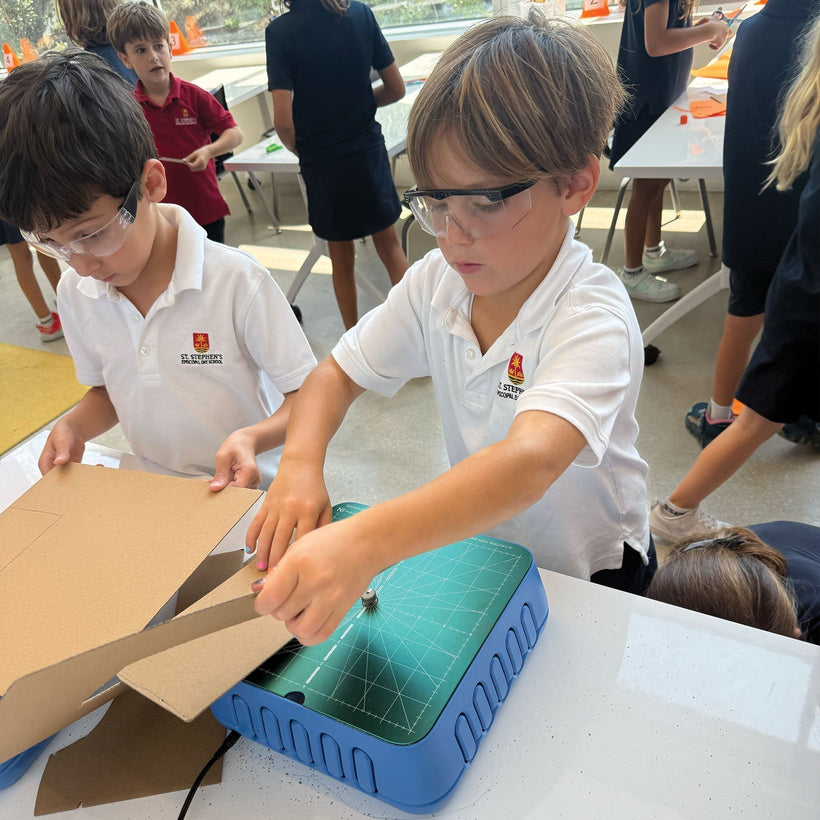
There are plenty of tricks you can keep up your sleeve to get better at cardboard construction! For example, did you know the white line on the ChompSaw's cutting head represents the exact width of your cut, which makes it easy to slot together pieces and create 3D shapes? You can also use your scoring tool to remove layers of cardboard to add different textures, or your hole punch to start cuts from the middle of cardboard pieces.
If you're just getting starting with your preschooler, we recommend practicing drawing large, simple shapes straight onto cardboard pieces and practice cutting out your drawings. Remember, the white line on the ChompSaw acts as a guide to show you where to cut!
In case you're new here, the ChompSaw is a power tool certified safe for kids as young as three with no blades or spinning parts. Here's what getting started actually looks like!
Once you've got the hang of making simple cuts, we recommend trying a pattern from our collection of digital patterns. We have a free starter project pack you can print at home and build a dinosaur, airplane, and puck slingshot.
Why it helps
When preschoolers build with cardboard, they’re doing more than honing their spatial reasoning and fine motor skills; they’re learning to take pride in bringing their ideas to life!
Looking for more ideas for little ones? Try these more hands-on activities for graduating preschoolers. Need a break from screens? Here are some screen-free ways to keep kids busy.
Tips for easy, low-stress sensory play
Sensory play should always be as easy and stress-free as possible. Keep these tips within hand’s reach for your next play session:
-
Keep activity sessions short (<20 minutes), to avoid meltdowns.
-
Follow the child’s lead to boost their confidence & encourage independence.
-
Keep messes at bay by setting up on a sheet or tray.
-
Make use of everyday item you have on hand (e.g., dried beans & pasta).
-
For water-play, set up the activity station in a sink or bathtub.
-
Avoid overstimulation or boredom by swapping out materials (e.g., dried pasta instead of beans).
Conclusion
Kids know all too well that sensory play doesn’t need to be complicated. No doubt, you already have a goldmine of household items at the ready! So choose whichever activity works best on any given day!
Or if you’re planning sensory play for a classroom full of littles, check out our Educator Hub, full of classroom-ready activities and resources!