


GRADES 3-5
Park Architects

Driving Question:
How can area and perimeter help us design the best park?
Activity Overview:
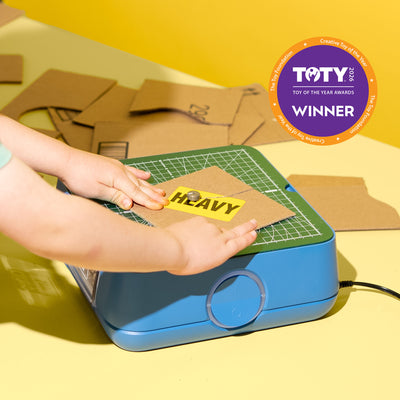
Park Architects, the city needs your help! Students explore how area and perimeter are used to design real-world spaces, then take on the challenge of fitting at least five park features into a city lot. Using the ChompSaw, students build a cardboard park model from their blueprint, then measure each section and calculate area and perimeter. The lesson wraps up with a Park Design Showcase where students tour each other's parks and reflect on what makes a smart design.
Learning Objectives
- I can explain the difference between area and perimeter.
- I can calculate the area and perimeter of rectangles.
- I can design and build a model community park.
- I can measure my model and use area and perimeter to describe my design.
Slide Deck


Full Materials List
Vocabulary Slides for frontloading
1 per student
1 per student
1 per 2 students
1 per student
Chompsaw(s)
Tape, glue
Rulers
Decorations (markers, felt, construction paper, etc)
Cardboard
Preview/Background Knowledge
- Students should be able to identify basic 2D shapes including rectangles and squares
- Students should have a basic understanding of multiplication and be able to apply it to simple two-factor problems
- Students should be able to measure length using a ruler to the nearest half inch
- Students should have an introductory understanding of what area and perimeter mean, even if they have not yet used formulas
Prep Instructions
1. Print Student Materials
- Print the following materials before class:
- Park Planning Sheet (1 per student)
- Park Measurement Sheet (1 per student)
- Park Design Showcase Sheet (1 per student)
- Assessment (optional) (1 per student)
2. Prepare Cardboard
- Each student needs two identical rectangles of cardboard.
- One piece serves as the park base (city property).
- The second piece is cut apart to create the individual park sections.
- Pre-cut cardboard to matching sizes before class to save time.
3. Gather Building Materials
- For each student or group, prepare:
- 2 identical pieces of cardboard
- 1 ChompSaw
- Glue and tape
- Rulers
- Pencils
- Optional decorating supplies:
- Markers
- Construction paper
- Popsicle sticks
- Pipe cleaners
4. Set Up Your Slides
- Pull up the Vocabulary Slides ahead of time for any students who need language frontloading.
- Have the Full Lesson Slide Deck ready in slideshow view — slides build on each other and use animations to reveal formulas and examples step by step.
- On the materials slide, edit the list to reflect what's actually available in your classroom.
5. Prep Your ChompSaw Station
- If you have multiple ChompSaws, students can cut independently or in small groups.
- If you only have one, plan to rotate students through the cutting station while others work on planning or decorating.
- Remind students that decorations should be added only after all measurements and calculations are complete.
6. Review Lesson Timing
- The planning, building, and measuring portions require the most time.
- If your schedule is limited:
- Complete planning and building during one class period.
- Complete measuring, calculating, and the Park Design Showcase during a second class period.
- This gives students more time to measure accurately and complete their calculations.
Extensions
Park Scale Challenge (5th Grade Extension)
- Students treat their cardboard model as a scale model where 1 inch = 5 feet.
- Students must:
- convert the dimensions of each park section into real-life measurements
- calculate real-life area and perimeter for each section
- Discussion Questions
- How large would your playground be in real life?
- How much fencing would the basketball court need?
- Which park section would be the largest in real life?
- Students must:
Prehistoric Park Challenge
- Students travel back in time and redesign one part of their park to welcome an extinct animal.
- Example Animals
- Tyrannosaurus Rex
- Triceratops
- Stegosaurus
- Woolly Mammoth
- Smilodon (Saber-Toothed Cat)
- Giant Ground Sloth
- Students must:
- research what their extinct animal needed to survive
- redesign one park section to safely accommodate it
- Discuss:
- What new park section did you add?
- How did your changes help your extinct animal?
- Example Animals
Weather Challenge
- Students draw a challenge card that changes their park's conditions.
- Challenge Cards
- Very Hot Summer
- Heavy Rain
- Strong Wind
- Snowy Winter
- Flooding
- Students may add:
- shade structures or covered picnic areas
- drainage ponds or raised walking paths
- wind barriers or extra trees
- Students must:
- explain how their redesign helps people use the park in their weather condition
- Challenge Cards
Future Park Challenge
- It's the year 2125! Students design a park for the future.
- Example Features
- Flying swing set
- Robot playground
- Hover bike path
- Hologram garden
- Drone delivery station
- Solar charging benches
- Floating fountains
- Example Features
Amusement Park Challenge
- The city wants to turn the park into an amusement park without making it any larger.
- Students must:
- add two new attractions to their existing park
- rearrange their design to fit everything within the original footprint
- Discuss:
- Which park section did you have to make smaller?
- How did you rearrange your design to fit everything?
- Students must: